Best Sandpaper for 3D Prints (2026): Grits That Actually Smooth PLA
Accessories
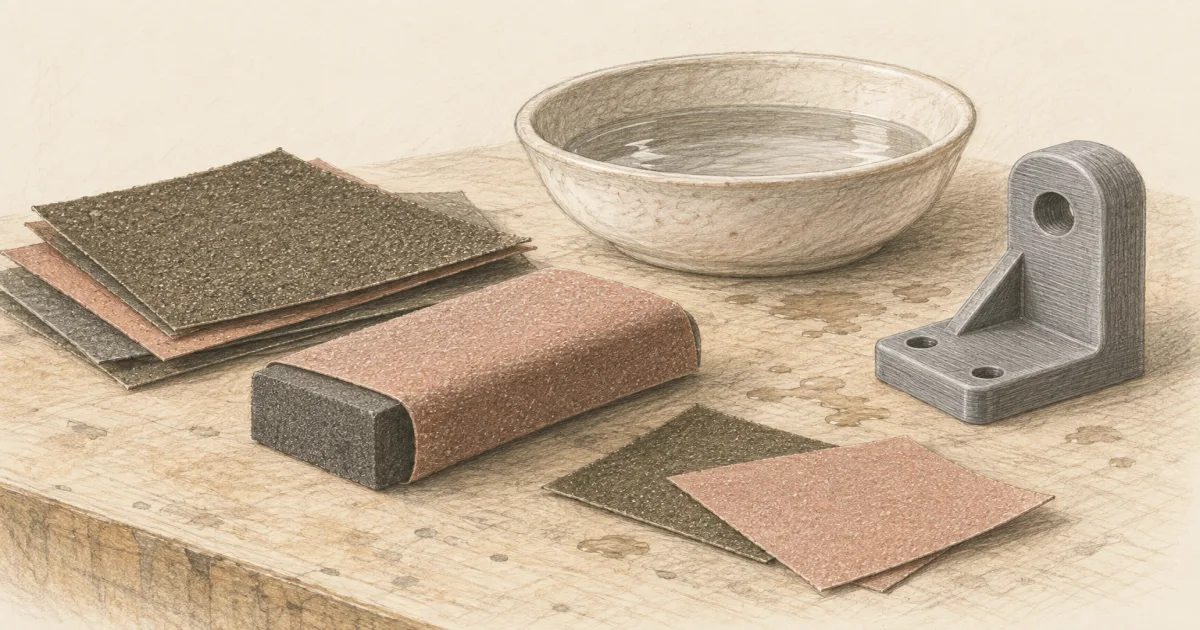
Sanding is the step that turns a print from obviously 3D printed into finished. The right wet and dry assortment matters more than brand, and a small detail block handles the corners a full sheet cannot reach.
Our picks
The best sandpaper for 3D prints is a wet and dry silicon carbide assortment, not one heroic grit. The Pihemum 45-piece set is our pick for most benches because it carries the whole ladder from 80 grit down to a 5000 grit polish in a single pack, and the grit is printed on the back of every sheet.
Sanding is the least glamorous part of the hobby and the one that decides how a finished part feels in your hand. Layer lines, support scars, and a rough brim all come off with paper and patience. It belongs in the same drawer as your other 3D printer accessories.
Pair it with the best deburring tool for 3D printing for sharp edges and the best flush cutters for 3D printing for supports. If you are building the bench from scratch, start with the 3D printer tools kit and tuck sandpaper into it. The 3D printer enclosure picks cover the other half of a tidy setup.
What grit sandpaper actually smooths a 3D print
Print surfaces fail in two ways. Peaks stick up where layers meet, and small valleys sit between them. Sandpaper removes the peaks. Filler and primer raise the valleys. You need both ideas in your head before you buy paper.
The grit ladder is the whole method. Coarse paper around 120 to 150 grit removes layer lines fast. Medium grits at 220, 400, and 600 erase the scratches the coarse pass left. Fine grits from 800 up bring a polish. Skip a step and the deep scratch from the last sheet stays visible after paint.
For most home prints, stop at 600 if you plan to paint and at 1000 to 2000 if you want bare plastic you can buff. Anything past 2000 is for display pieces and clear coats, where a mirror finish is the point.
Best overall: Pihemum 45 PCS Wet Dry Sandpaper
The Pihemum 45 PCS Wet Dry Sandpaper set is 45 sheets across 15 grits from 80 to 5000, three sheets each. Silicon carbide, 9 x 3.6 inches, waterproof and tear resistant, and each sheet can be trimmed to fit a block or a curved surface.
That range is the reason to pick it. You get the coarse paper for a rough bracket and the 5000 grit for a polished display piece without buying three packs. The middle of the range gets used most, which matches how often the 220 and 400 sheets come out on a normal print.
Pick this when you want one box that covers every stage. Skip it if you only ever sand small miniatures, where a detail block below does a better job on the shapes you actually print.
Best value: Shineboc 21-Sheet Assortment
The Shineboc Sandpaper Assortment is 21 sheets, three each of 120, 220, 400, 600, 800, 1000, and 2000 grit. The sheets are 9 x 3.6 inches, work wet or dry, and the silicon carbide is electrostatically coated so the grit sits evenly.
Three sheets per grit is the smart part. The coarse sheet always wears out first, so a pack that gives you the same count for 120 and 2000 keeps you stocked where it counts. It is also the cheapest way to find out which grits your prints actually need before you commit to a bigger set.
Choose this when you want a low-cost starter pack or a refill for the grits you burn through. Step up to the Pihemum set when you want the full polish range in one box.
Best for tight details: TOVPADE Micro Sander
The TOVPADE 54PCS Premium Micro Sander pairs a compact sanding block with 54 papers in nine grits from 80 to 800. The block is about 3.5 x 1 inches, so it follows corners, curves, and grooves that a full sheet cannot reach.
The grip is what makes it useful on 3D-printed parts. Small features and thin walls punish heavy pressure, and a block that fits the shape lets you sand a fine feature without flattening it. The three-color grit system keeps the coarse paper away from a detail you already finished.
Buy this if your prints have holes, recessed panels, or fine detail. It complements a sheet assortment rather than replacing it, because the block is too small for a big flat face.
The grit ladder we use on PLA and resin
PLA and resin do not want the same paper. PLA is soft and heat sensitive. Cured resin is hard and brittle, so it chips instead of shaving if you push the grit.
Work across the layer lines, not along them. Sanding with the lines just chases the ridges. Circular strokes keep the surface even and stop a visible direction pattern from forming on a flat face.
Let the paper cut. Light pressure with a fresh sheet removes more than heavy pressure with a loaded one, and heavy pressure on thin walls is how parts warp and edges round over.
Wet sanding versus dry sanding on 3D prints
Dry sand the coarse grits. The 120 and 150 sheets cut faster dry, and at that stage you are removing peaks, not polishing. The dust is heavier than you expect, so a mask matters.
Wet sand from about 220 grit up. Water lubricates the cut, carries the dust away, and keeps friction heat down. PLA softens around 60 C, and a fast dry pass can get there in under a minute, which is how a surface ends up smeared instead of smooth.
Set up a shallow plastic tub, add water and a single drop of dish soap, and dunk the part and the paper as you go. Rinse the part between grits so a coarse particle does not scratch the surface you just created.
Mistakes that scratch or melt a print
The most common miss is skipping grits. Going from 150 straight to 600 leaves deep scratches that look fine on bare plastic and then show up under paint.
The second is pushing too hard. A dry, hot pass on PLA smears the surface and rounds over the crisp edges you wanted to keep.
The third is not cleaning between grits. Loose grit from the coarse sheet sits on the part and cuts grooves during the fine pass. Wipe or rinse every time you change paper.
The fourth is sanding a support scar down to nothing and taking the surrounding detail with it. Stop when the surface is level and move on, or switch to a spot filler for the low areas.
When to skip sandpaper
Skip sanding if your real problem is stringing, poor adhesion, or a part that is dimensionally off. Those are print settings, not finishing problems, and no grit fixes them.
Skip it too if you are printing in a material that sands badly and you do not plan to paint. Some glossy filaments look better left alone, and a light pass can dull the finish you bought them for.
If you print functional parts, though, a small sanding kit earns its space fast. Flush edges and a clean surface change how a part feels in the hand, and the whole setup costs less than a spool.
Bottom line
The Pihemum 45 PCS Wet Dry Sandpaper set is the best sandpaper for most 3D printing benches, with a grit range that covers shaping through polishing. Take the Shineboc 21-Sheet Assortment for a cheap starter pack, and add the TOVPADE Micro Sander for corners and small details. Sand wet from 220 up, step through the grits, and clean the part between passes.
Frequently Asked Questions
What grit sandpaper should I use for 3D prints?
Start around 120 to 150 grit to knock down layer lines, then step through 220, 400, and 600 for a paint-ready surface. Add 800 to 2000 grit if you want a polished finish on bare plastic. Skipping the middle grits leaves scratches that show up once paint goes on.
Is it safe to sand 3D prints?
The plastic dust is the real concern, not the sandpaper. Wear a dust mask and eye protection, and wet sand from about 220 grit up. Water traps most of the dust and keeps the paper from clogging, so a bowl of water is the simplest safety upgrade you can make.
Does sandpaper work on PLA?
Yes, and PLA responds well to wet sanding. It softens around 60 C, so fast dry sanding can generate enough friction heat to smear the surface. Keep the paper and the part wet, use light pressure, and work in circles.
What is the best way to sand a 3D print?
Work up through the grits instead of jumping from coarse to fine. Sand across the layer lines rather than along them, wipe the part between grits so a coarse particle does not scratch the finer surface, and let the paper do the work with light pressure.
What is the best sanding tool for 3D prints?
A foam or rubber block with a cut sheet is best for flat faces. Sanding sticks and a compact micro sander reach grooves, holes, and small features. Most benches end up with both, plus a deburring tool for the sharp edges that sanding cannot get to.
Can you wet sand 3D prints?
Yes, and it is the better choice on PLA from 220 grit and up. Water lubricates the cut, carries away dust, and controls heat. A single drop of dish soap in the water adds enough slip that the sheet glides instead of catching.
Do I need sandpaper if I plan to use filler primer?
Yes. Filler primer works best on a surface that has already been knocked down. Sand the obvious layer lines first, then prime, then wet sand again between coats. Sanding and priming are a back-and-forth pair, not alternatives to each other.
How do I keep sandpaper from clogging so fast?
Wet sand the fine grits and wipe the sheet against a towel as it loads up. Warm plastic and primer residue are what gum up the grit, so keeping the part cool and the surface clean buys a lot more life from each sheet.