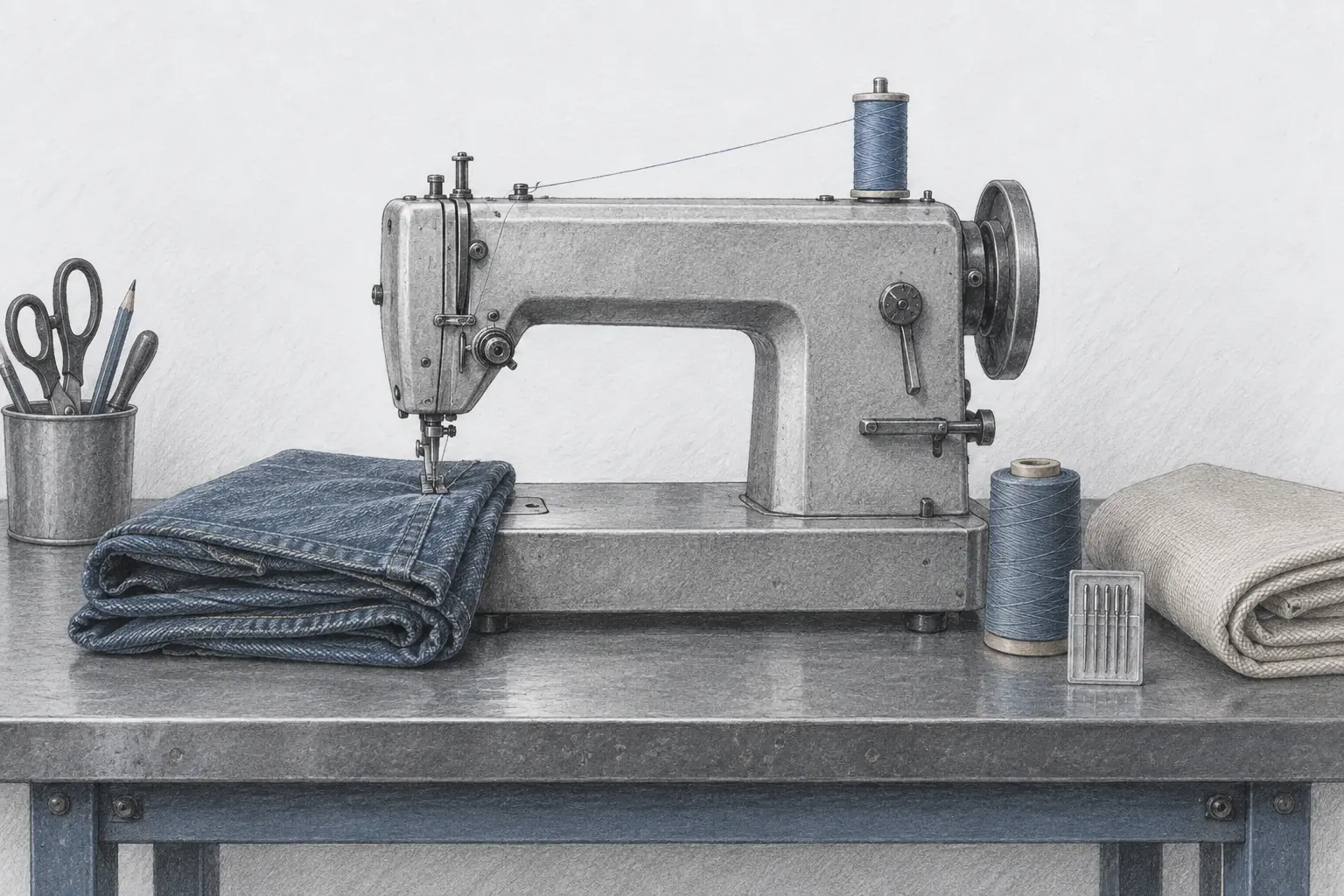
Best Heavy Duty Sewing Machine (2026): Denim, Canvas, and Layers
Sewing & Embroidery
A heavy duty machine is mostly about the frame, the motor, and the needle. These two will take denim and canvas that a starter machine refuses, if you feed and needle them correctly.
Our picks
"Best heavy duty sewing machine" is really a question about your fabric. A heavy-duty label on a plastic machine does not make it one. The SINGER 4452 Heavy Duty earns the name with a metal frame and a stronger motor, and it is the pick for jeans, canvas, and home decor fabric.
This guide sits in our Sewing and Embroidery guides, next to the first machine guide. If you already have a light machine and you only need more piercing power for a few jobs a month, read this page before you buy a second machine you do not need.
A heavy-duty machine is not magic. It has the same needle, bobbin, and feed dogs as any other machine. What changes is how much the frame flexes and how much torque the motor has when the needle meets four layers of denim. Everything else is technique.
What "heavy duty" actually means
The word gets used loosely, so here is the honest version. A home heavy-duty machine has a metal frame, a motor that does not stall as easily, and often a higher top speed. It is designed for thick fabric and long sessions, and it holds its settings better than a plastic-framed model.
It is not an industrial machine. It will not sew a leather belt or upholstery hide all day. It will handle denim hems, canvas bags, home decor weight fabric, and the occasional patch of light leather, provided you use the right needle.
The two specs that matter most are the frame and the presser foot lift. The frame keeps the needle aligned under load. The lift lets a thick seam pass under the foot without jamming. A walking foot is the other big one, because it feeds the top and bottom layers together.
Top pick: SINGER 4452 Heavy Duty
The SINGER 4452 Heavy Duty is the pick for thick fabric and volume. It has a full metal interior frame, a stainless steel bed plate, and a motor with 50 percent more power than the standard Singer motor. Top speed is 1,100 stitches per minute.
The bundle is what makes it an easy recommendation. You get the walking foot, which feeds multiple layers evenly, plus a non-stick foot for leather and vinyl, a clearance plate for sewing over heavy seams, and heavy-duty needles. Those are the exact accessories people buy separately after the first wrestling match with a denim seam.
It has 32 built-in stitches and 110 stitch applications, including a one-step buttonhole. The top drop-in bobbin is clear, so you can see when the bobbin is running low instead of finding out mid-seam. Singer also supports it with an app that has set-up videos.
In a long heavy-use test, a small team sewed hundreds of items on one and called it a workhorse, and they were surprised at how relatively quiet it stayed for the power. That is the endorsement that matters here. It is a machine you can run for a long afternoon.
Choose the 4452 if you sew denim, canvas, or home decor fabric regularly and you want the accessories in one box. Skip it if your heaviest job is a single curtain hem, because a lighter machine will do that for less.
Best value: Brother ST371HD
The Brother ST371HD Strong and Tough is the value pick. It has 37 built-in stitches, a one-step buttonhole, and a metal needle plate that smooths fabric feeding on heavier material. It comes with 6 feet, including a nonstick foot and a spring-action zigzag foot, plus heavy-weight needles.
It is a mechanical machine, so there is no screen and no menu. You set the stitch with a dial and sew. For heavy fabric that simplicity is a feature, because there are fewer settings to fight when the material is stubborn. It also has drop feed for free-motion work.
Owners report it handling denim and layered fabric without stalling, and one who shortened jeans kept the original hem cleanly. The independent test notes are less glowing than the owner reviews, but the theme is the same: it is a solid, simple machine that does not need to be coaxed.
Choose the ST371HD if you want heavy-duty capability at a lower price and you prefer a dial machine. Skip it if you sew in a dim room or you want the walking foot and extension table included, because those point to the Singer bundle.
Needles and thread make the machine
A heavy-duty machine still fails on the wrong needle. Use a denim or heavy-duty needle, size 100/16 or 110/18, for jeans and canvas. A general-purpose needle bends under load, skips, and can hit the plate hard enough to shift the timing.
Match thread weight to the needle. Heavy topstitching thread needs a bigger eye, and if the thread rubs at the eye it will fray and snap even on a machine that is perfectly adjusted. Test on a scrap of the same fabric before you touch a real project.
Change the needle often on heavy work. Denim and canvas dull a needle faster than cotton, and a dull needle is the most common cause of a machine that suddenly will not feed.
How to sew a thick seam without stalling
Thick seams fail at the same place: the moment the needle hits the folded edge. A few habits get you through.
- Start on a flat part and sew up to the thick point. Do not try to start on the ridge.
- Use the hand wheel for the first few stitches, so you feel the needle enter instead of forcing it with the pedal.
- Raise the presser foot pressure slightly so the fabric can move.
- Use a denim needle and a longer stitch length.
- Keep the layers aligned with a walking foot, or pin and baste before you sew.
- If the machine stalls, stop. Pushing the pedal harder is how you break a needle or knock the machine out of time.
That sequence solves most of the complaints about "heavy duty" machines. The machine was never the whole story.
When a home heavy-duty machine is not enough
If the fabric is thick leather, upholstery hide, or webbing, a home machine is the wrong tool. Those need a walking-foot industrial machine, and some jobs want a hand tool instead. Buying a home heavy-duty machine for that work leads to frustration and a repair bill.
Home decor and canvas are the sweet spot. Denim hems and repairs are the sweet spot. A bag with a few layers at the strap is the sweet spot, if you slow down at the joins.
If the real job is finishing seams rather than joining them, a serger is the tool you are missing. That is a different machine with a different job, and it does not replace the sewing machine.
Bottom line
The SINGER 4452 Heavy Duty is the best heavy duty sewing machine for most home makers, because the metal frame, the walking foot, and the included heavy-duty needles take layered denim and canvas in stride. The Brother ST371HD is the value pick when you want that capability in a simpler dial machine. Buy the right needle, slow down at the thick seam, and either machine will outwork a plastic-framed model.
Frequently Asked Questions
What makes a sewing machine heavy duty?
Three things: a metal frame instead of plastic, a motor with more piercing power, and the ability to run at higher speed without stalling. Features like a walking foot and heavy-duty needles help, but the frame and motor are what decide whether the machine can take layered denim at all.
Can a heavy duty home machine sew leather?
Light leather and suede, yes, with a leather needle and a slow pace. Thick saddle leather and multiple layers need a walking-foot industrial machine or a hand tool. A home machine will mark or stall before it sews a heavy belt.
Do I need a walking foot for denim?
It helps most on layered seams and quilting, where the top layer wants to slide against the bottom. The SINGER 4452 bundle includes one. On the Brother ST371HD you can add a walking foot later if bulky seams give you trouble.
What needle should I use for denim?
Use a denim or heavy-duty needle, usually a size 100/16 or 110/18, and change it often. A general-purpose needle will bend or snap on a thick seam and can knock the machine out of time.
Why does my machine stall on thick seams?
Usually the needle is too fine, the presser foot is pressing too hard, or you are starting the seam on the thickest point. Raise the presser foot pressure a little, use a denim needle, and turn the hand wheel to start the first stitches instead of pressing the pedal.
Can I use heavy duty thread in a home machine?
Yes, in the needle and the bobbin, but match the thread weight to the needle size and check the tension on a scrap. Thread that is too thick for the needle rubs, frays, and snaps at the eye even when the machine is fine.
Is a serger better for heavy fabric?
A serger finishes and trims an edge, so it is a companion, not a replacement. You still need a sewing machine to join the layers. If your main job is jeans and canvas construction, a heavy-duty sewing machine comes first.