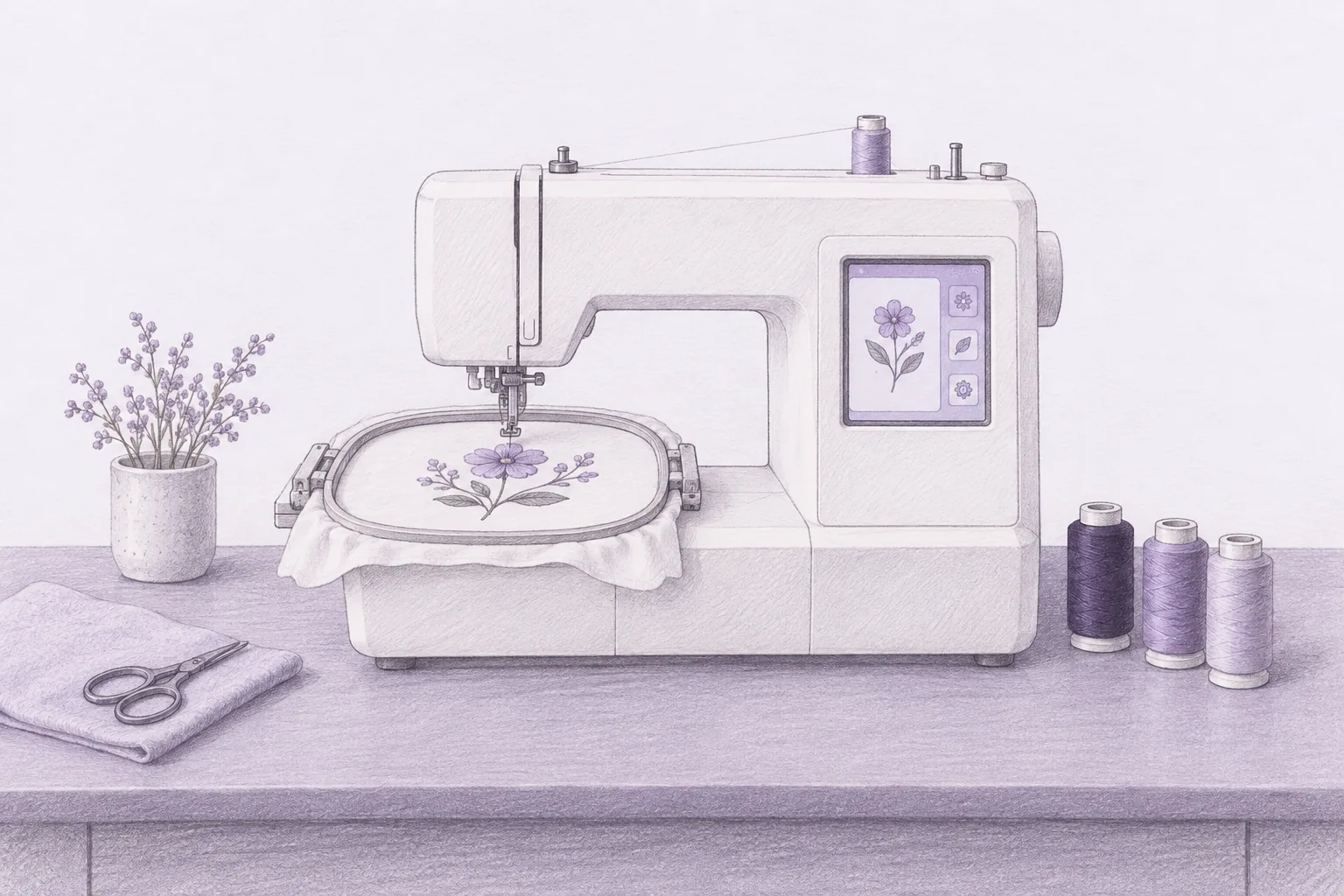
Best Embroidery Machine for Beginners (2026): Two Easy First Machines
Sewing & Embroidery
An embroidery machine stitches a design onto fabric you already made, which is a different job from sewing a seam. These two Brother machines are the easiest place to start, if a 4 by 4 hoop fits the plan.
Our picks
The best embroidery machine for a beginner is the Brother SE700. It is a combo machine, which matters more than it sounds. You can sew the tote bag and then stitch the design on it, with one machine and one learning curve.
This guide sits in our Sewing and Embroidery guides, beside the first machine guide and the heavy duty guide. If you are still deciding between sewing and embroidery, start with the first machine guide, then come back here.
Embroidery is a different job from sewing, and it helps to say that plainly. A sewing machine joins two pieces of fabric with a seam. An embroidery machine moves a hoop under a fixed needle and stitches a design onto fabric that is already made. They share a brand and a price range, not a purpose.
What separates an embroidery machine from a sewing machine
The mechanism is the giveaway. On a sewing machine, the needle and the feed dogs move the fabric forward in a straight line under your hands. On an embroidery machine, the needle stays put and the hoop moves the fabric left, right, forward, and back to trace a design.
That is why the hoop matters so much. The maximum design area is set by the hoop size, and it is the single spec that decides which projects you can take on. A 4 by 4 field handles patches and monograms. Bigger projects need a bigger hoop.
A combo machine gives you both motions in one box. An embroidery-only machine gives you the hoop motion and skips the seam.
What a 4x4 hoop can and cannot do
A 4 by 4 hoop is the beginner standard, and it is more useful than the skeptics suggest. It covers monograms, name patches, small florals, collar details, baby onesies, and pocket designs. It is the right size for learning.
It cannot do a full back-of-jacket design, a large quilt block, or a wide banner in one pass. You can split a larger design and re-hoop it, but that is a skill you learn after the first few projects. Owners who fall in love with embroidery usually outgrow 4 by 4 within a year or two and start eyeing a 5 by 7 machine.
Buy the 4 by 4 machine if your ideas fit it. If they do not, save longer for a bigger hoop. The wrong hoop size is the most common reason a new embroidery machine sits in a closet.
Top pick: Brother SE700
The Brother SE700 is the pick for most beginners because it does two jobs. It has 103 built-in sewing stitches and 10 one-step buttonhole styles for garments, plus 135 built-in embroidery designs and 10 lettering fonts for decorating them. One machine, one setup.
The beginner features are the story. It has a 3.7 inch color touchscreen with drag-and-drop design positioning, automatic needle threading, and an automatic thread cutter. Wireless LAN lets you send designs from a computer with the free Design Database Transfer software, or draw one in the Artspira app and send it from your phone.
It embroiders at up to 710 stitches per minute and includes 8 presser feet, so it is ready for seams as well as hoops. Brother backs it with a 25-year limited warranty on the chassis and a 2-year electronics warranty.
Choose the SE700 if you want to sew and embroider without buying two machines. Skip it if you already own a sewing machine you like and never plan to make a seam on the new one.
Best embroidery-only: Brother PE545
The Brother PE545 is the embroidery-only pick. It has the same 135 built-in designs, 10 lettering fonts, 4 by 4 field, 3.7 inch touchscreen, and wireless transfer as the SE700. What it drops is the sewing side, which makes the interface simpler and the body smaller.
That simplicity is real value for a beginner. Fewer menus mean fewer places to get lost. The drag-and-drop positioning lets you move a design on the screen with a finger, and the automatic thread cutter handles the pause between colors.
It embroiders up to 400 stitches per minute, which is slower than the combo machine but plenty for small designs. It has a USB port as well as Wi-Fi, so you can load designs either way. Independent reviews put it near 4.5 stars with a strong beginner reputation.
Choose the PE545 if you already have a sewing machine and want a focused embroidery machine at a lower price. Skip it if you need one machine to do everything, because it will not sew a hem.
Stabilizer, needles, and thread that make the first design clean
The machine is only half of a clean design. The other half is what you put under and through it.
Stabilizer is not optional. It backs the fabric so the stitches do not pull it out of shape. Tear-away is the easy default for stable woven cotton. Cut-away lasts longer on knits and stretchy fabric. Water-soluble is the choice for towels, lace, and anything where you cannot leave a backing.
Use an embroidery needle, usually a 75/11, and embroidery thread. All-purpose sewing thread works for seams, not for dense designs. If the upper thread snaps, check every thread guide in order before you touch the tension, because a missed guide is the usual cause.
Hoop the fabric snug, not stretched. Beginners tend to over-tighten the hoop screws, which distorts the fabric before the first stitch. The fabric should be taut and flat, like a drum head, not pulled hard.
How to get a clean first hoop
- Pick stable fabric for the first project. A cotton towel or a plain tote is forgiving.
- Cut a piece of tear-away stabilizer larger than the hoop and hoop it with the fabric.
- Pick a small built-in design, not a dense multi-color one.
- Check the needle is an embroidery needle and the bobbin is wound evenly.
- Run the design on a scrap first if the fabric is new to you.
- Watch the first few stitches, then let it run and stay nearby.
- Trim jump threads with a small pair of scissors when it finishes.
That routine prevents the two beginner failures: puckered fabric and a design that starts in the wrong place.
When embroidery is the wrong hobby to start
Embroidery is the wrong place to start if you cannot sew a seam yet. Every embroidered item still has to be made into something, and a combo machine can do both, but the sewing skill comes first. Start with the first machine guide.
It is also the wrong start if your ideas are all large. A full jacket back or a quilt block wants a 5 by 7 field or bigger, and fighting a 4 by 4 hoop will sour you on the hobby.
And it is the wrong start if you want a business in month one. Small embroidery work is slow, and pricing it properly takes experience. Learn the craft on gifts and personal projects before you take orders.
Bottom line
The Brother SE700 is the best embroidery machine for most beginners because it sews and embroiders in one machine and its touchscreen and wireless transfer make the first design easy. The Brother PE545 is the right pick if you already own a sewing machine and want a simpler embroidery-only companion. Buy the machine that matches your hoop size, learn on a towel, and the 4 by 4 limit will not matter until you are ready for a bigger one.
Frequently Asked Questions
What is the best embroidery machine for a beginner?
The Brother SE700 is the best first machine for most people, because it sews and embroiders in one body and includes 135 designs. If you already own a sewing machine and only want designs, the Brother PE545 does the same embroidery in a simpler, smaller machine.
Do I need a sewing machine as well as an embroidery machine?
Only if you buy an embroidery-only machine. A combo like the SE700 sews seams and hems as well as designs, so it is one purchase. An embroidery-only machine like the PE545 decorates fabric that is already sewn, so it sits beside a sewing machine rather than replacing it.
What does a 4 by 4 embroidery hoop mean?
It means the design area is 4 inches by 4 inches. That covers patches, monograms, small motifs, baby clothes, and pocket details. Larger designs have to be split and re-hooped, which is fiddly. If most of your ideas are bigger than a coaster, look at a 5 by 7 machine instead.
Do I need stabilizer for every design?
Yes. Stabilizer is what keeps the fabric from stretching or puckering under the stitches. Tear-away is the easy default for stable woven fabric, cut-away lasts longer on knits, and water-soluble works for towels and lace. Match the stabilizer to the fabric, not to the design.
What needle and thread should I use?
Use an embroidery needle, commonly a 75/11, and embroidery thread rather than all-purpose sewing thread. A common beginner problem is upper thread snapping, and it is almost always a missed thread guide or the wrong needle size, not a machine fault.
How long does an embroidery design take?
A small monogram takes a few minutes. A dense 4 by 4 design with several colors can run 20 to 40 minutes or more, and the machine stops between color changes. Plan the design so you are nearby when it pauses.
Can a Cricut do embroidery?
No. A cutting machine cuts vinyl and paper. It can cut applique shapes for you, but it does not stitch. If stitching the design is the goal, you need an embroidery machine.
What is the first project for a beginner?
A monogrammed hand towel or a simple patch. Both are flat, stable, and forgiving, and they teach hooping, stabilizer, and color changes without a lot of fabric to ruin.