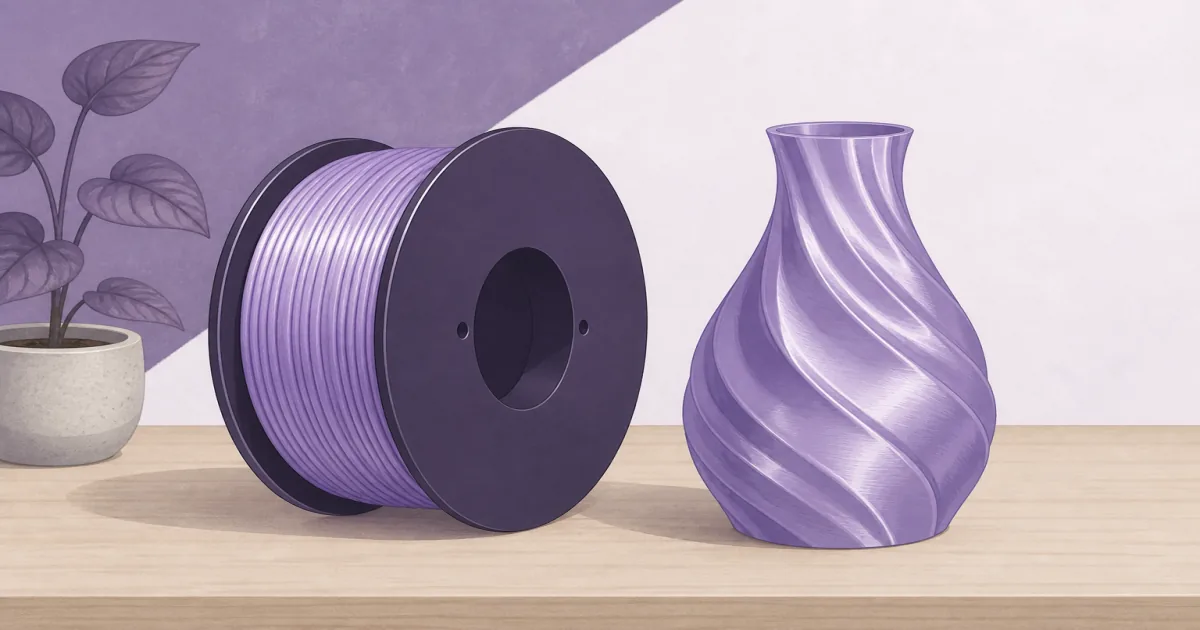
Silk PLA Filament: Shiny Prints Without Painting
Filament
Silk PLA filament gives a glossy, almost painted look straight off the bed. These Eryone spools cover a bold pink, a silver metal look, and a dual-color blue-green roll for decorative parts.
Our picks
Silk PLA filament is for prints that should look finished when they leave the plate. The surface catches light. Layer lines soften. People think you painted the part. You did not. More finish spools sit in our filament guides.
It is still PLA. Desk organizers and costume accents are the sweet spot. Structural brackets belong on tougher filament. If you are still learning first layers, buy ordinary PLA from best PLA filament first, then add silk for show pieces.
How silk PLA behaves
Expect a shiny skin that rewards clean walls and consistent cooling. Over-cooling can frost the gloss. Under-extrusion looks worse on silk because the shine highlights gaps. Keep retraction sane. Silk likes tidy travel moves more than max speed claims.
Dry storage still matters. A glossy spool that absorbed moisture prints dull and stringy. Seal the bag between jobs.
Top pick: Eryone silk pink
ERYONE Silk PLA Filament 1.75mm Silk Pink is the easy first silk spool. Pink shows the finish clearly, and the Eryone silk line has a long review trail for home FDM desks. Print a small vase or prop accent before you commit a whole costume panel.
Use it when the part is meant to be seen. Skip it when the part lives under load or outdoors.
Best metal look: silk silver
ERYONE Silk PLA Filament 1.75mm Silk Silver looks like brushed metal from display distance. Lamps, costume trim, and decorative frames benefit most. Up close you still see layers, so do not promise machine-shop aluminum.
Keep the nozzle clean. Dark leftover PLA in the melt zone can muddy silver until a purge cube clears it.
Best dual-color: blue-green silk
ERYONE Silk Dual Color PLA Filament Blue Green co-extrudes two colors in one strand. Tall vase-mode prints show the shift best. Flat cubes look less interesting. Orient the model so curves catch both tones.
If you already own a multicolor system, you may not need dual silk. For a single-extruder desk, this is the cheap way to get a two-tone look.
Settings that keep the shine
Do not chase abrasive filled filaments through the same tip you use for silk display parts.
Projects that suit silk (and ones that do not)
Silk shines on vase-mode lamps, decorative boxes, cosplay accents, and gift prints where the surface is the point. It is a weak choice for screw bosses, snap fits, outdoor clips, and anything that flexes in a hot car. If the part must survive a drop, buy tougher filament and paint later.
Print a calibration cube and a small curved vase before you commit a full costume panel. Silk makes tuning mistakes obvious. That is useful. It is also frustrating if you expected magic from a bad first layer.
Tuning notes that protect the finish
Start with the spool’s suggested nozzle and bed ranges. Then change one thing at a time. If walls look dull, try a little less part cooling or a slightly higher outer-wall temperature. If stringing spikes, clean the nozzle and check dryness before you slash temperature into under-extrusion.
Keep travel moves tidy. Silk rewards profiles that already print clean PLA. A chaotic draft profile will look worse under gloss than under matte charcoal.
Store opened silk sealed with desiccant. A humid week turns shine into haze. If the spool sat open, dry it before you blame the brand. Pair storage habits with filament dryer guidance when PETG-level humidity problems show up on PLA.
Color and purge tips
Light silk colors show leftover dark PLA for longer than you expect. Run a purge tower or a small discard cube when switching from black to pink or silver. Dual-color silk already mixes tones in the strand, so leftover color matters less, but a dirty nozzle still muddies the shift.
If you want frosted props instead of gloss, stop shopping silk and read matte PLA filament. If you want stone flecks instead of shine, see marble PLA filament. If you want color bands that shift along one spool, see rainbow PLA filament.
Buying checklist before you open the bag
Confirm 1.75 mm diameter unless your printer needs something else. Confirm the spool will fit your holder or AMS path. Confirm you have a clean brass nozzle ready. Confirm you have a small test model queued, not a twelve-hour helmet on the first silk roll.
Price per kilogram matters less than finishing the spool. One pink roll you finish beats three specialty colors that sit sealed forever.
Common silk PLA mistakes
Ordering three specialty colors before you finish one pink roll. Printing silk on a dirty nozzle after carbon fiber. Running max fan on every layer until the sheen turns chalky. Leaving the bag open on a humid bench for a week, then blaming the brand when walls look dull.
Another mistake is promising “metal” to a client when you mean silk silver PLA. From arm’s length it sells. Under a hard light it still shows layers. Set expectations before you ship.
If stringing ruins a glossy vase, dry the spool and lower travel speed before you invent a new temperature profile. Silk amplifies mess. It rarely invents a new failure mode.
Bottom line
For most shiny home prints, ERYONE Silk Pink is the straightforward buy. Move to Silk Silver for metal-look decor, or Dual Blue Green when you want color shift without a multicolor printer. Learn basic PLA first, then spend silk on parts people will actually display.
Frequently Asked Questions
What is silk PLA filament?
It is PLA with a glossy, pearlescent surface. Layers look smoother and shinier than standard matte PLA, which is why people use it for props and decor.
Is silk PLA stronger than regular PLA?
Treat it like decorative PLA. For brackets and outdoor parts, stay with tougher materials from best 3D printer filament.
What temperatures work for silk PLA?
Most Eryone silk rolls print near normal PLA nozzle and bed ranges. Start with the spool card, then tune one temperature tower if walls look dull or stringy.
Does silk PLA need a dryer?
Fresh sealed spools are usually fine. If the bag sat open in humidity, dry it. Popping and rough walls are moisture clues. See filament dryer.
Will silk PLA clog my nozzle?
It is still PLA, not carbon fiber. Use a clean 0.4 mm brass nozzle and avoid mixing abrasive filled filament in the same tip.
Silk PLA vs matte PLA?
Silk hides layers with gloss. Matte hides layers with a chalky look. Pick silk for shiny gifts, matte for stealth figurines. Everyday black PLA still wins for learning. See best PLA filament.
Can I paint silk PLA?
You can, but the point of silk is skipping paint. If you plan heavy primer work, buy cheaper standard PLA instead.