Best Resin Heater for 3D Printing (2026): Warm the Vat, Not the Room
Resin
Resin thickens as the room cools, and a thick vat is where failed prints start. These three heaters warm the chamber or the bottle, so exposure times stay predictable in a garage or a cold spare room.
Our picks
Resin changes with the room. A bottle that pours like syrup in July turns thick in a cold garage, and a thick vat drains off the model slower, which shows up as soft detail and prints that fail late. The fix is not a hotter exposure. It is a warmer chamber.
The best resin heater for most home benches is the ELEGOO Smart Mini Heater, because it holds the air around the vat without you touching a dial. If you already print resin, the rest of our resin guides cover the bottles and the cleanup, and the best resin 3D printer guide covers the machines themselves.
One note before you shop. An FDM enclosure heater and a resin chamber heater are different products with different jobs, so if you are trying to keep an ABS print warm rather than a vat thin, read the 3D printer enclosure heater guide instead.
Why resin wants a warmer room
Resin is a mix of monomers and photoinitiators, and both move faster when they are warm. In practice, owners report that the sweet spot sits around 25 C to 35 C, with a lot of people holding about 30 C through a whole print. Below that window, the same slice file needs more exposure, drains more slowly, and leaves more resin clinging to fine detail.
The temperature that matters is the vat, not the room. That is the whole reason a chamber heater exists. It warms the air inside the printer cover, which is where the vat sits, and it keeps that air steady while the build plate moves up and down through it.
Best chamber heater: ELEGOO Smart Mini Heater
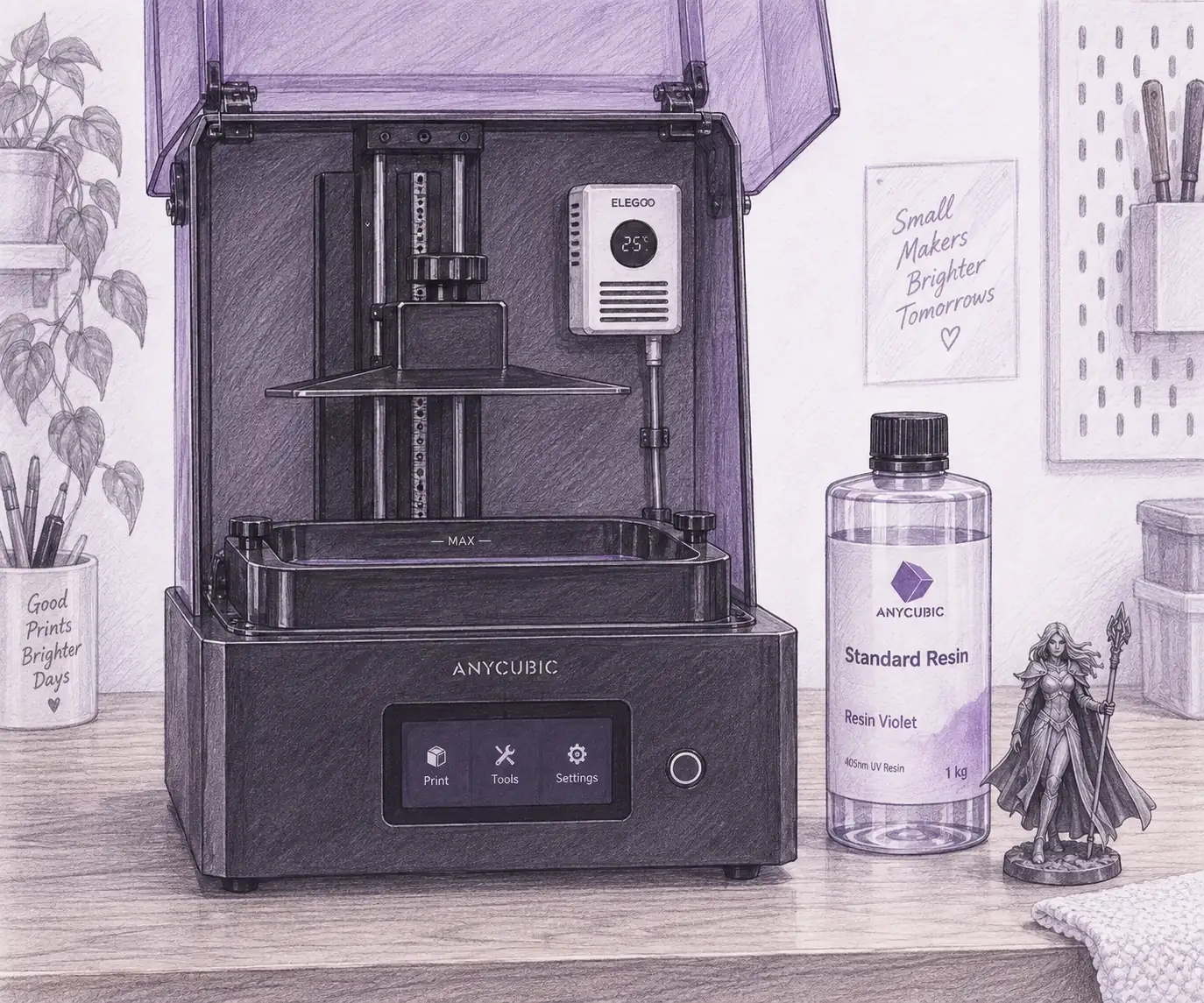
The ELEGOO Smart Mini Heater is the default add-on for a resin printer that lives somewhere chilly. It is a 120W PTC heater with a 10,000 rpm fan, and its control logic is refreshingly simple. Below 25 C it heats. Above 25 C it stops. There is a real-time temperature display, and the same fan that moves heat also pushes air through a filter, so you get odor control in the same box.
It mounts to the printer case with a supplied adapter plate, and ELEGOO publishes plates for its Mars and Saturn range. That is worth checking before you order. If you run another brand, you measure the plate map and add the holes yourself, which is a ten-minute job with a drill and a steady hand.
The honest tradeoff is airflow. Owners report the fan blows across the vat and can put a ripple in the resin and the print surface. There is also no hold setpoint, so it cycles on and off around the trigger temperature. Mount it high, keep the cover on, and those become minor.
At this price, with a live discount on the listing, it is the cheapest way to stop a cold room from changing your results. That makes it a good time to buy if you have been putting off winter printing.
Choose the ELEGOO if you want automatic chamber heat and smell filtering in one small unit. Skip it if your printer is already in a warm room.
Best heater and filter in one: ANYCUBIC Mini Purifier & Heater
The ANYCUBIC Mini Purifier & Heater takes the same idea and splits it in two. It pairs a 55W heater with an activated-carbon cartridge, and each side has its own control, so you can filter resin odor while the printer sits idle and warm the chamber only when a job is queued. That is genuinely useful in a shared room.
The temperature sensor reads to 0.1 C, which is finer than most owners need but does keep the chamber steady, and the unit throttles its power back once the chamber passes 40 C so it is not fighting itself. The carbon cartridge is replaceable, and the purifier works with the heater off.
The caveat is the same as any chamber heater. It warms air, not the vat, so give it a head start and let the thermometer settle before you start an exposure test. If you want the resin itself warmed, you need a vat heater built into the printer or a bottle warmer.
Choose the ANYCUBIC if heat and odor need to be controlled separately. Skip it if the ELEGOO is cheaper on the day, because they solve the same problem.
Best for warming resin bottles: Resiners AirWarm
The Resiners AirWarm Auto Resin Preheater solves a different half of the same problem. It is a heated box with a digital setpoint from 30 C to 70 C and a timer that runs 20 to 120 minutes, and it holds a large bottle or a few small ones at once. Warm resin pours thinner, mixes more evenly, and releases trapped air faster, which is exactly what you want before a pour.
Treat it as a companion rather than a competitor. If you pour molds, coasters, or jewelry, warm the bottle in the AirWarm and print in a separate machine. If you only run a resin printer, you want a chamber heater instead.
Choose the AirWarm if bottles are what go cold in your shop. Skip it if the vat is the thing that needs help.
How to set the temperature and where to mount the heater
Treat the chamber like a small oven. Pick a target, let the heater reach it, and then start the print. Around 30 C is a good working target for most standard resins, warm enough to keep the vat thin and cool enough that nothing cooks.
Two things go wrong when people rush this. The first is starting a print with a cold vat and a warm air reading, because the resin takes longer to catch up than the air does. Give it ten or fifteen minutes. The second is aiming the fan straight at the vat, which stirs the surface and can leave artifacts. Point it along the wall of the chamber and let the air mix.
Warm resin also changes your numbers. If you built a profile at 18 C and now the chamber sits at 30 C, your exposure will be too long. Re-run your calibration after the heater goes in, then leave the profile alone.
When a heater is the wrong buy
Skip a heater if your printer lives in a normal heated room and the vat never feels cold to the touch. You would be adding a fan, a cable, and another thing to switch on for a problem you do not have.
Skip it if your failures are support and orientation problems. A warm vat will not save a model that was angled badly or hollowed without drain holes. Fix the file first, then warm the room.
Skip a bottle warmer if you only pour occasionally. A bowl of warm water does the same job once a month, and the counter space is worth more than the convenience. Buy the AirWarm when mixing a batch is part of your week.
Bottom line
A resin heater is really a temperature habit. The ELEGOO Smart Mini Heater is the best pick for most benches because it holds the chamber automatically and filters the smell at the same time. The ANYCUBIC Mini Purifier & Heater wins when you want heat and odor on separate switches and a steadier sensor. The Resiners AirWarm is the right tool when the cold thing is the bottle, not the printer. Match the heater to where the cold actually is, recalibrate your exposure once, and winter stops changing your results.
Frequently Asked Questions
What temperature should resin be for printing?
Most resin works best between about 25 C and 35 C. Below that the liquid thickens, it drains off the model slowly, and the same exposure that worked in summer starts under-curing. A heater that holds the chamber near 30 C keeps your profile predictable across the year.
Do I actually need a resin heater?
Only if the room drops below roughly 22 C for long stretches. In a heated house you can usually skip one. In a garage, a basement, or a cold spare room, a heater is cheaper than re-testing exposure times every time the weather turns.
Can I just put a space heater next to the printer?
That is the expensive and annoying version. A room heater warms everything, cycles on and off, and stirs dust toward an open vat. A chamber heater sits on the printer and holds the air around the vat, which is the part that matters.
What is the difference between a chamber heater and a vat heater?
A chamber heater warms the air inside the printer cover, which is the common retrofit for most LCD and MSLA machines. A vat heater warms the resin directly and usually comes built into newer printers. The chamber kind is what you can add to the machine you already own.
Will a mini heater fit my resin printer?
Usually, with an adapter plate. ELEGOO ships plates that match its own Mars and Saturn models, and the heater also works on other brands if you measure the plate map and drill the matching holes. Check the clearance above the vat before you mount anything.
Does a resin heater also remove the smell?
Both the ELEGOO and ANYCUBIC units pull air through a carbon filter while they run, which cuts the resin odor in a small room. That is a real help, but it does not replace ventilation. Keep the window open or run an air purifier as well.
Can I warm resin bottles in hot water instead?
A warm water bath works and costs nothing, but it is messy, it soaks the label, and you have to dry the bottle before you pour. A bottle warmer does the same job with a setpoint and a timer, which matters when you mix the same ratio every week.