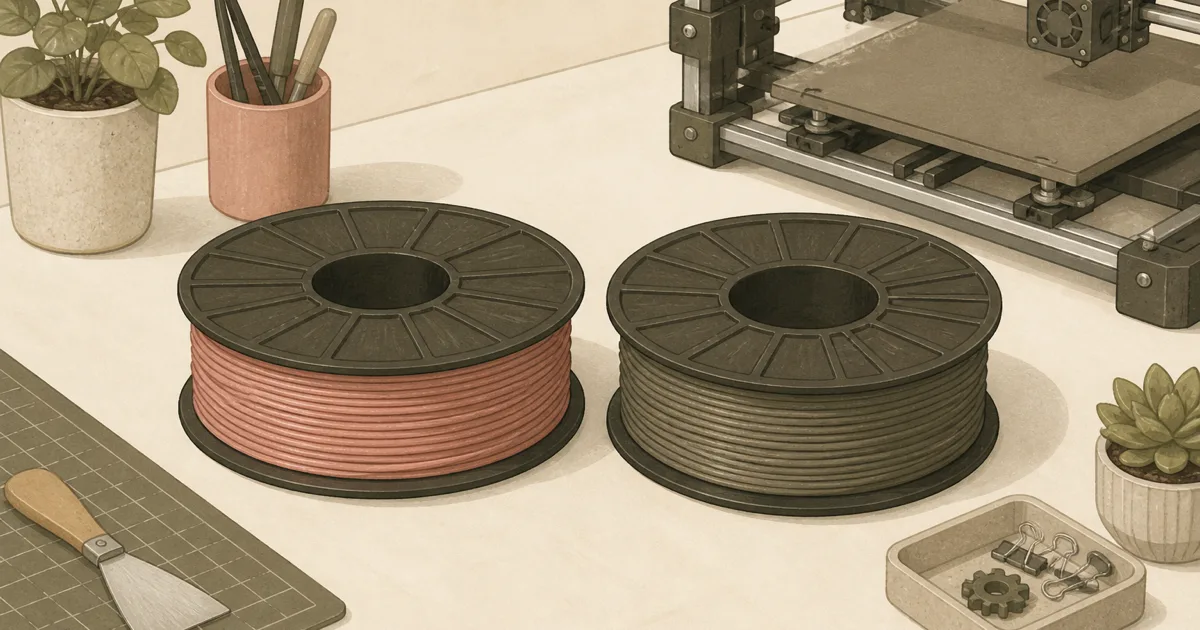
PLA vs ABS: Easy Prints Versus Heat-Tough Parts
Filament
PLA is easier and milder in a shared room. ABS handles heat and knocks better if you can print it enclosed. Pick the job first, then the spool.
Our picks
PLA vs ABS is the old filament fork that still shows up in every buying thread. People treat it like a loyalty test. It is closer to a room-and-job check. Easy desk toys want PLA. A bracket that sits near a window in July often wants ABS, plus an enclosure. Browse the full spool set in our filament guides.
This is a decision page, not a chemistry lecture. For PETG as the middle path, see PLA vs PETG. When you are already past PLA and choosing PETG vs ABS, see PETG vs ABS. For machines that can actually hold ABS heat, see best 3D printer for ABS. Broader spool shopping sits in best 3D printer filament.
PLA vs ABS at a glance
PLA prints cooler and smells milder. ABS wants a warm chamber and a first layer you do not rush. That single chamber note explains most “ABS is impossible” threads.
Choose PLA: Hatchbox
HATCHBOX PLA is the everyday answer. Black 1.75 mm covers calibration cubes, hooks, organizers, and gifts without turning the room into a workshop. You want a spool that just prints on a clean bed with a stock PLA profile.
PLA softens in heat. Do not trust a PLA phone mount on a summer dashboard. Do trust it for indoor parts and for learning profiles before you buy engineering filament.
If a print fails with Hatchbox PLA on a dry spool, look at leveling, Z-offset, and bed cleanliness before you leap to ABS. ABS will not forgive a bad first layer.
Choose ABS: Hatchbox
HATCHBOX ABS is the upgrade when PLA parts warp in a warm room or snap when you flex them once. Same brand, same 1.75 mm habit, different temperatures and smell.
Dry it if the bag has been open. Wet ABS prints like a bad machine: bubbles, weak layers, and mystery clogs. A filament dryer is cheaper than a second printer.
Expect more warping on open frames. A clean PEI sheet, a real enclosure, and a slower first layer beat glue-stick panic for most modern beds. Pull parts carefully so you do not gouge the plate.
How to switch materials without wrecking a week
- Finish a known-good PLA print so you trust the machine.
- Unload PLA and purge the nozzle at ABS temperature.
- Load dry ABS and run a small cube, not a 12-hour helmet.
- Keep the chamber closed and the room ventilated.
- Store the open ABS spool sealed or in a dryer.
Do not change printer, filament, and slicer profile on the same night. Change one variable.
Strength, heat, and “functional” myths
ABS is not automatically stronger in every test. Orientation, wall count, and infill matter more than the noun on the spool. Heat is clearer. PLA softens earlier. ABS usually survives warmer rooms better.
If the part lives outdoors year-round, plan ASA or a similar UV-tougher path, not a single ABS impulse buy on an open frame.
PETG still sits between these two for many clips and mounts. If you do not need ABS heat and you do not want ABS smell, read the PETG comparison instead of forcing this fork.
Smell, ventilation, and apartment realities
PLA is usually apartment-friendly. ABS can smell sharper even inside an enclosure. Crack a window, keep the printer off the bedroom nightstand, and do not treat “the lid is closed” as a filter.
If you share a small room, print PLA overnight and save ABS for daytime with airflow. Neighbors notice odor more than they notice your layer height.
Settings that usually differ
PLA often likes more part cooling and a cooler nozzle. ABS often likes less cooling, a hotter nozzle, a hotter bed, and a closed chamber. Copying a PLA profile onto ABS is a classic warp recipe.
Use the brand’s starting range, then tune with small cubes. Save named profiles so you are not guessing next month.
Bed temp usually rises for ABS. Give the bed time to reach temperature before the print starts. A cold bed with hot ABS is how corners lift in the first two minutes.
When to ignore the debate
If you only print two figurines a year, buy PLA and stop reading forums. If you already broke three PLA clips on a shop door, buy ABS only after you have an enclosure plan.
Machine quality still matters. A stable printer from best 3D printer makes either material less dramatic. A warped bed makes both look worse.
Related filament guides
For the PETG middle path, open PLA vs PETG. For enclosed hardware, see best 3D printer for ABS. More guides sit on the blog and the homepage.
Bottom line
Start with HATCHBOX PLA. Move to HATCHBOX ABS when parts need more heat resistance and you can keep the chamber warm and the room ventilated. Match the filament to the job, not to the loudest forum argument of the week.
Frequently Asked Questions
What is the difference between PLA and ABS?
PLA prints cooler, smells milder, and sticks more easily on most PEI sheets. ABS needs more heat, an enclosure for reliable parts, and ventilation. ABS usually survives warmer rooms and knocks better than PLA.
Is PLA or ABS stronger?
Strength depends on walls, infill, and orientation. ABS often wins on heat and impact for similar parts. A thick PLA clip can still beat a thin ABS shell.
Do I need an enclosure for ABS?
For reliable ABS on a home desk, yes. Drafts cause warping and layer splits. PLA rarely needs a sealed chamber.
Is ABS safe to print at home?
Follow the printer maker’s guidance and ventilate. ABS fumes are sharper than PLA. Do not treat a closed bedroom as a print lab.
Can I print ABS on an open-frame machine?
You can try small parts in a warm, still room. Most home buyers get cleaner ABS results in an enclosed printer. See our enclosed-printer notes if that is the real bottleneck.
Should I start with PLA or ABS?
Start with PLA. Switch to ABS when a part failed from heat or brittleness and you already have a stable first-layer routine.
How do I switch from PLA to ABS without clogs?
Finish a known-good PLA print, purge at ABS temperature, then load dry ABS and run a small cube before a long job.