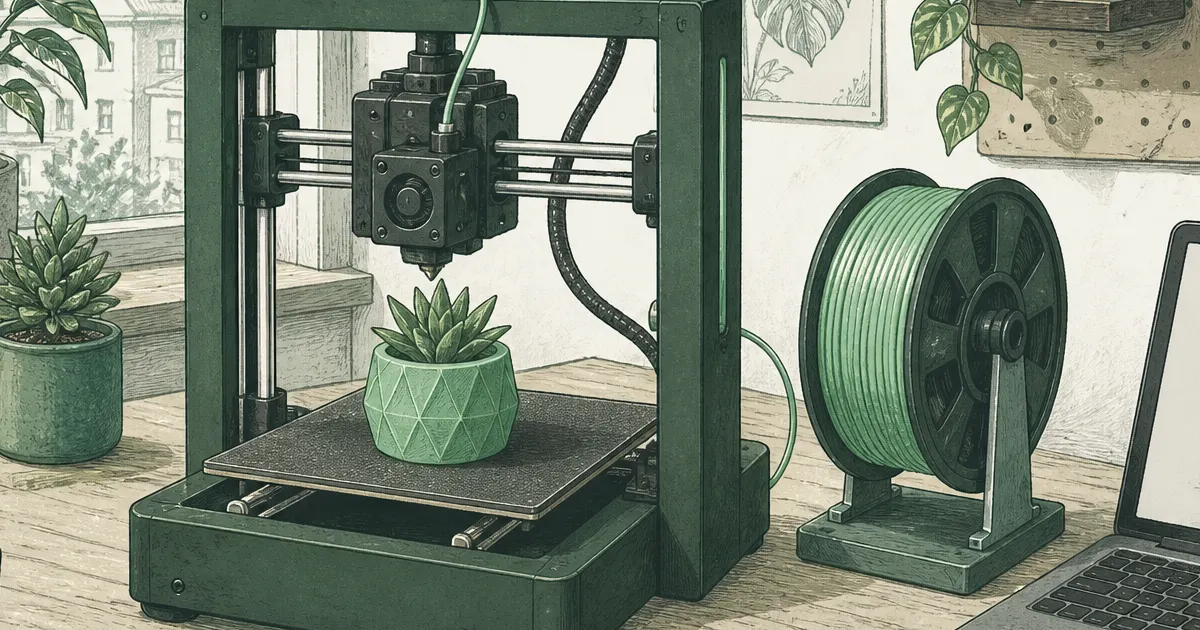
Best Small 3D Printer: Compact Machines That Still Make Useful Parts
Printers
Small does not have to mean toy-like. A compact 3D printer can make cable guides, drawer trays, tabletop miniatures, labels, and small replacement parts very well. The important limit is build volume, not print quality.
Our picks
Small does not have to mean toy-like. A compact 3D printer can make cable guides, drawer trays, tabletop miniatures, labels, and small replacement parts very well. The important limit is build volume, not print quality. Measure the first five models in a slicer before you treat a bigger machine as automatically better. Our 3D printer guides holds the rest of the compact picks.
The pillar best 3D printer covers the whole field, and best 3D printer under 300 covers the budget lane. This page is about the desk: what actually fits, what each machine prints, and what one costs per liter of build volume.
What counts as a small 3D printer?
A small 3D printer is one with a compact footprint and a modest bed, usually around 180 mm to 220 mm per side. Small describes the bench space it takes, not the quality of its prints.
Small is about the bench, not the print quality
The A1 Mini and the full A1 use the same calibration hardware and the same slicer. The mini is not a lesser machine; it is the same print head and routine in a smaller frame. The 180 mm cube is about 5.83 liters of build volume, and the printer body is roughly 347 by 315 by 365 mm with a 5.5 kg weight, so it sits where a bigger bed-slinger cannot.
The build volume is the real limit
Build volume decides what fits, and it is the one number a listing tends to bury. A 180 mm plate takes a cable guide, a drawer insert, most miniatures, and a phone stand. It does not take a cosplay helmet or a wide storage bin. Check the moving envelope, not just the frame, before you buy.
Top pick: Bambu Lab A1 Mini Combo
The Bambu Lab A1 Mini Combo is the small-printer pick because the 180 mm bed, automatic calibration, and AMS lite cover most apartment projects without eating the desk. Cable guides, drawer trays, labels, and tabletop bits fit. Helmets and wide storage trays do not.
Automatic calibration does not mean you never clean a bed or check the first layer. It means you spend less time on the basic setup that makes older hobby printers frustrating. Keep the filament path clear, use a known-good profile, and start with a simple model. The printer arrives mostly pre-assembled and ready in under 20 minutes, and silent mode is rated under 48 dB with active noise canceling.
How much desk does the mini need?
The mini's body is about 347 by 315 by 365 mm and 5.5 kg, so it fits beside a monitor on a normal desk. Leave room for the spool, the power cable, and your hands when you pull a part. A full-size 200 mm filament spool does not fit diagonally on the 180 mm plate, so plan the spool beside the machine, not on it.
Larger-bed alternative: Bambu Lab A1 Combo
The Bambu Lab A1 Combo makes more sense when the build volume is the reason. The 256 mm cube is about 16.78 liters, roughly 2.9 times the mini, on the same calibration hardware. The A1 runs a 49-point calibration on the first print, and while it can reach about 500 mm/s, about 300 mm/s is the fastest it prints without obvious quality loss.
Buy it for a practical reason, not because its specification list is longer. Measure the system before ordering. The printer body is only part of the footprint. Leave room for the spool, the power cable, access to the screen, and a clear path to remove a finished part. A multicolor setup also needs space for a filament changer and several spools.
When the bigger plate beats the smaller footprint
Size up only when the parts, not the photos, demand it. A wide electronics tray, a lamp shade, or a large single-piece bracket will not fit the mini. If your list is all small parts, the extra bed area is wasted desk.
How do the two small printers compare?
Both print PLA, PETG, and TPU, both self-calibrate, and both accept the AMS lite. The split is the plate you get and the shelf you give up.
What does a small printer cost per liter of build volume?
The A1 Combo looks more expensive until you divide by volume. At about $25 per liter against about $63, the larger machine is cheaper for the space it prints, so pick on fit rather than on the sticker alone.
Which mini 3D printer is the best?
The A1 Mini Combo is the best mini printer for most people because it calibrates itself, fits a desk corner, and covers small functional parts and miniatures. Pick the A1 Combo instead when build volume, not footprint, is the deciding factor.
Material matters too. PLA is the easy place to start because it prints at modest temperatures and has little odor. PETG is tougher and handles heat better, but it benefits from dry storage and a clean first layer. Our best PLA filament guide covers the first spool.
The AMS lite is convenient but not perfect. It reads RFID tags only on Bambu spools, and it sometimes needs the external spool holder for PLA Matte and Silk. Those are the moments to fall back to the simple holder rather than fight the changer.
What can a small 3D printer not make?
Large helmets, wide storage trays, tall props, and multi-part assemblies that need one continuous piece will not fit a compact bed. That is the honest ceiling, and it is about geometry, not quality.
If most of your list fits the plate, the compact machine is the better buy. It takes less desk, costs less to enter, and prints the same small parts at the same quality. Move up only when a real project does not fit, and then go to the best 3D printer for home use lane rather than guessing.
Do small printers make good first printers?
Yes. A small printer is often the better first machine because it is easy to place, easy to move, and quick to set up. A finished print matters more than the biggest bed.
Make the first print boring. Use the official slicer profile, print a small box or a calibration cube, and watch the first layer in person. Keep one good spool of PLA dry and labeled while you learn. If a print starts stringing, popping, or feeding inconsistently, inspect the filament path and spool before changing a dozen settings. Our filament storage guide explains the basics.
Put the printer on a stable surface. A wobbly folding table can show up as ringing or shifted layers. Keep curtains, loose paper, pets, and children away from the hotend and heated bed. A small machine on a solid desk is the easiest way to start.
Bottom line
The Bambu Lab A1 Mini Combo is the best small 3D printer for most people because it has a compact body, automatic calibration, and a useful multicolor option. Choose the full A1 Combo if your planned models need a larger bed. Measure the desk, price the printer with a first spool of PLA, and choose the machine that fits the projects you will really make.
Frequently Asked Questions
Which mini 3D printer is the best?
The Bambu Lab A1 Mini Combo is the best small printer for most desks because its 180 mm bed covers organizers, labels, and miniatures while its footprint fits beside a monitor.
What is the best small home 3D printer?
The same A1 Mini Combo. It self-calibrates before every job, runs quietly, and prints PLA without a paper leveling routine, which suits a home room.
How do I choose the right size?
Open a few models you plan to make in a slicer and compare their dimensions with the listed build volume. Let the parts decide, not the product photos.
What can a small 3D printer not make?
Large helmets, wide storage trays, and tall props will not fit a compact bed. Move to the full-size A1 Combo when your models outgrow the 180 mm plate.
Should a beginner buy extra filament?
Yes. Start with one good PLA spool so you can learn the machine without guessing whether the material is the problem.
Can I leave a new printer alone on its first job?
No. Watch the first layer and stay nearby until you know the printer, material, and profile work together.
Do I need a bigger printer for functional parts?
Not if the parts fit the bed. Choose a larger printer only when your models outgrow the compact volume, since a bigger machine takes more desk space.